


In this article
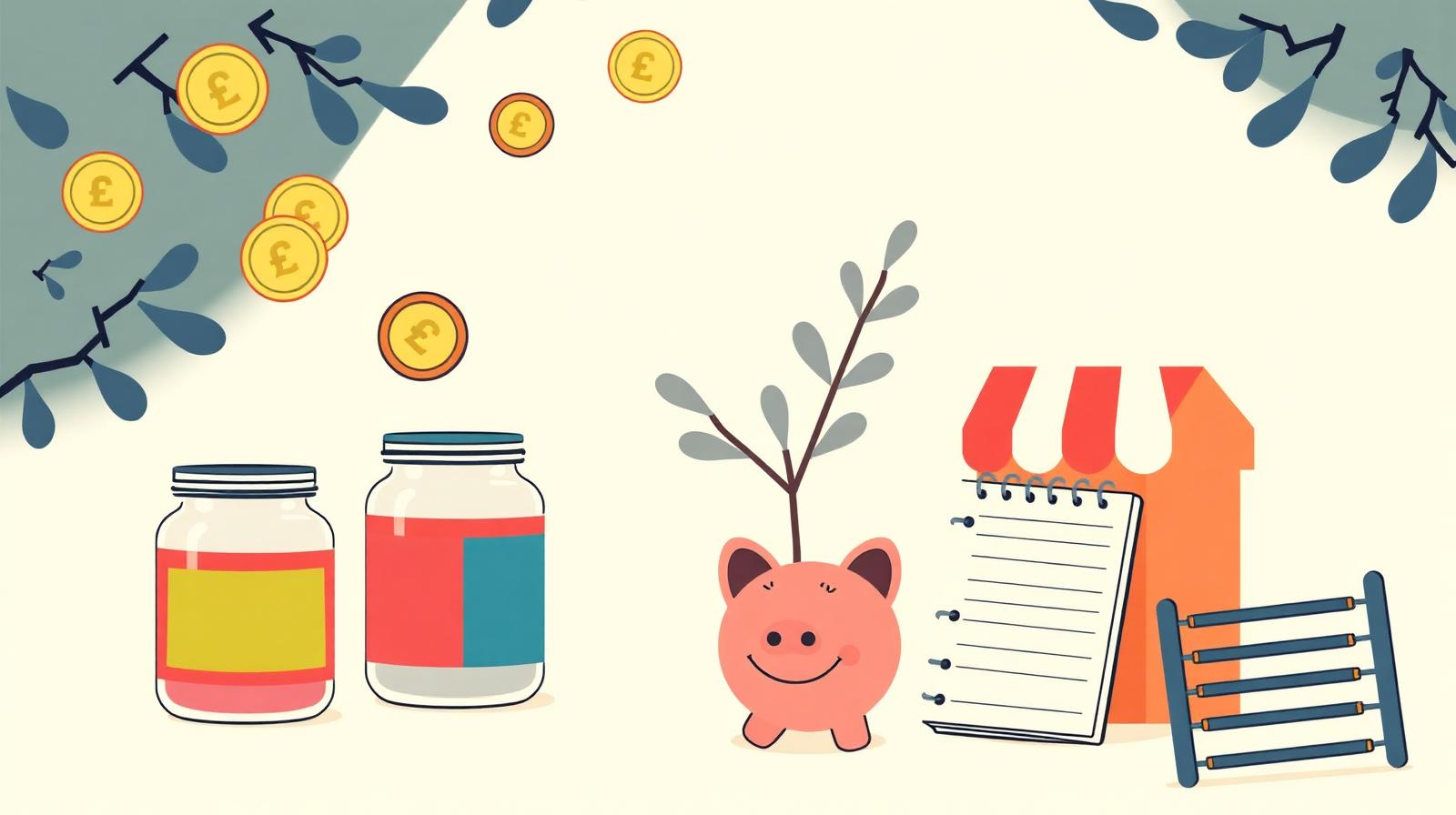
How to teach kids about money, in one line: let them use it. Give children real coins, real choices and real (small) consequences from age 6, layer on pocket money and budgeting from 9, add earning and tax basics from 13, and cover banking and investing by 15. This UK guide gives you the exact activities, apps and conversations that work at each stage.
Key Takeaways
- Money habits are formed by age 7 – start early with playful experiences
- Pocket money is the cheapest classroom in the world – use it deliberately
- Use the save-spend-share-invest framework as kids grow up
- UK teens can earn £12,570 tax-free plus £1,000 self-employed Trading Allowance
- A Junior ISA started at birth at £20/month grows to ~£6,000 by 18
- Entrepreneurship is the fastest way to make money real – start a £5 micro-business
Money is one of the most important life skills your child will ever learn – and one of the least taught. Only 47% of UK children say they've had any meaningful financial education at school. The good news? Parents are by far the biggest influence on a child's money behaviour – and you don't need a finance degree to do it well. You need a plan, a few quid, and a willingness to let your child get it slightly wrong. Pair this guide with our 5 Ways to Talk About Money article for the conversation side of things.
Why money skills matter (and why now)
A landmark Cambridge University study commissioned by the Money Advice Service found that money habits are largely set by age 7. Yet UK financial education in schools is patchy – it sits inside PSHE and maths but isn't ringfenced. That makes home the primary classroom.
The cost of getting this wrong is real. The Money and Pensions Service estimates that nearly half of UK adults don't feel confident managing their money, and millions reach adulthood without ever having opened a savings account, read a payslip or thought about compound interest. Most of them aren't unintelligent – they were simply never shown.
The flip side is the opportunity. Children who get hands-on money experience early are more likely to save regularly as adults, less likely to fall into problem debt, and far more likely to start their own businesses. For girls in particular – who, according to Girlguiding's Girls' Attitudes Survey consistently receive less financial encouragement than boys – early money confidence is one of the most powerful equalisers a parent can offer.
Money habits form by age 7. If your child is between 6 and 11, you're inside the most influential window of their financial life.
Ages 6–8: Coins, choices and curiosity
At this age, money is concrete. Kids learn by holding it, counting it and exchanging it. Skip the apps for now – use real coins. The aim isn't to teach economics, it's to make money visible: something you have a finite amount of, that runs out when you spend it, and that comes back when you save or earn.
Resist the urge to over-explain. A 6-year-old doesn't need a lecture on opportunity cost – they need to feel the slight sting of choosing the chocolate bar and then realising they can't afford the comic too. That tiny moment of "oh" is worth more than a dozen worksheets.
Try these this week:
- The £2 supermarket challenge. Hand them £2 and a small list of items to find. They learn prices, comparison and trade-offs in 10 minutes.
- Save-spend-share jars. Three jars, every coin split three ways. The ratio is up to them. The "share" jar is where empathy and money meet – let them choose the cause.
- Coin sorting maths. Empty your change pot. Get them to sort, stack and total it. Pure maths disguised as a game – and a sneaky way to cover KS1 number bonds.
- Price the weekly shop. Before you check out, ask them to guess the total. Closest guess gets 50p. Suddenly they're paying attention to every label.
- Lemonade or biscuit stand. Their first taste of revenue, costs and profit. Use our 101 Business Ideas for Kids for inspiration.
- Play the Money Jars Game. Spend, save or invest? A fun way to practise splitting money into jars and see what happens to each pot over time.
For a structured introduction, our free Pioneers Course works brilliantly for ages 6–8 done with a grown-up alongside – it turns money and business concepts into 10-minute illustrated activities.
Ages 9–11: Pocket money and planning
This is the goldilocks age. Children can plan, delay gratification and run small projects. The Halifax Pocket Money Survey puts the UK average around £6–£8 a week at this age – but the amount matters far less than what you do with it. A child who gets £3 a week and is asked to budget it will learn more than a child who gets £15 with no expectations.
This is also the age to introduce the idea that money has a job. Every pound is either spending money, saving money, sharing money or growing money. Once they grasp that simple framework, the rest of life slots into it.
Try these this month:
- Set a savings goal. A bike, a Lego set, a concert ticket. Calculate weeks-to-goal and chart it on the fridge. The visible progress is what makes saving feel good.
- Family meal budget. Give them £20 to plan and shop for a Friday dinner for four. Real responsibility, real numbers, real garlic bread.
- Plan a birthday party within a set budget. Give them £30–£50 and challenge them to plan their own (or a sibling's) party: invitations, snacks, decorations, a small activity. They quickly learn that £8 on balloons means £8 less for the cake. Let them make the trade-offs. Use our free Budget Boss tool to sketch it out first.
- Open a junior account. NatWest Rooster, GoHenry or Starling Kite turn pocket money into something they can track on their phone – and you can top up instantly instead of hunting for coins.
- The "needs vs wants" sort. Empty their wishlist onto the kitchen table and sort it into needs, wants and "actually I'd forgotten about that". A surprisingly powerful 15 minutes.
- Run a real micro-business. Car wash, dog walking, custom bookmarks at the school fair, friendship bracelets, garden plant sales. Use our free Profit Calculator to work out costs, price and profit in one screen.
- Run the Cookie Crew Simulator. They set prices, manage costs and watch profits grow – a safe way to experience how small decisions stack up into real business results.
Our Pioneers Course (ages 9–11) walks them through running a real business idea from spark to first sale, with money baked in at every step – and pairs every concept with a real UK female founder so the lessons stick.
Ages 12–14: Earning, budgeting and digital money
From age 13, teenagers can legally take on light part-time work – paper rounds, babysitting, tutoring younger kids. This is also when most of their money becomes invisible (Apple Pay, in-app purchases, Vinted, Roblox Robux) – which is exactly why budgeting becomes critical. They can spend £40 in an afternoon without ever touching a coin.
The other shift at this age is social pressure. Trainers, phones, festivals, group meals – peer spending becomes a real force. The most useful thing you can do isn't to ban or judge it, it's to help them build the muscle of asking "is this worth it to me?" before they hand over the card.
Try these this term:
- The clothes/social budget switch. Hand over a monthly budget for non-essentials. They manage it. You stop being the bad guy. Game-changer.
- Track every penny for 2 weeks. Eye-opening. The Money Helper budget planner is free and brilliant. Most teens are stunned by where their money actually goes.
- The 24-hour rule. For anything over £20, wait 24 hours before buying. Half the time the urge passes. The other half, they truly want it.
- Start a real side hustle. Vinted reselling, dog walking, digital art commissions, tutoring younger kids on a subject they love. Our Teen Side Hustle guide walks through it.
- Talk about ads, influencers and "drops". Every "sponsored" video and limited-edition launch is a lesson in marketing psychology. Spot it together – it makes them harder to manipulate.
- Try the Business Simulator. An 8-week virtual business where they set prices, manage cashflow and learn that one bad week doesn't sink the ship – resilience matters.
- Use the Money Maths Calculator. Perfect for working out profit margins, setting prices and planning savings goals for their side hustle.
Our Innovators Course (ages 12–14) and Blaze AI coach help them turn an idea into a real business they can run alongside school – with safety guardrails built in.
Ages 15–18: Tax, investing and financial freedom
The years before they leave home are your last big window. Cover the things schools rarely do: tax, interest, debt, investing and how to read a payslip. If they only learn one thing in this stage, make it compounding – it's the closest thing to a financial superpower.
This is also when entrepreneurship gets serious. A 16-year-old can legitimately register a business, build a Shopify store, sell to international customers and reinvest the profits – all before their first day of university. Most don't, simply because no adult ever told them they could.
The non-negotiables:
- The Personal Allowance. They can earn £12,570 a year tax-free – everyone, including teens.
- The £1,000 Trading Allowance. HMRC's Trading Allowance lets them earn £1,000 from a side business with zero tax and zero paperwork.
- Compound interest demo. Show them: £100/month from age 18 to 65 at 7% = ~£380,000. £100/month from 28 to 65 = ~£170,000. Starting early is the only superpower that matters.
- Junior ISA → adult ISA. The Junior ISA allowance is £9,000 a year and converts to an adult ISA at 18.
- Read a payslip together. Gross vs net, NI, tax code, pension. Five minutes that saves years of confusion.
- Open a Stocks & Shares ISA conversation. They don't need to invest yet – they need to understand that "saving" in cash loses to inflation, and that the FTSE Global All Cap exists. A 20-minute YouTube explainer beats a finance degree.
- The first credit card chat. Before any 0% offer lands in their student inbox, talk through APR, minimum payments and how a £500 spend can become £1,200. Forewarned is forearmed. Then send them through our Credit Quest – a step-by-step journey through credit scores, interest and why your money reputation matters.
- Explore funding options. If they're serious about a business idea, the Funding Explorer maps 12 ways to fund a startup – from savings and crowdfunding to grants and investors.
"If they leave home knowing how tax works, how compounding works, and how to spot a financial scam – you've already given them more than 90% of UK adults have."
Our Trailblazers Course (ages 15–18) covers tax, pricing, pitching and growing a real business – plus the free interactive tools they need to plan it.
UK apps, accounts and tools we recommend
Banking and pocket money apps:
- GoHenry – ages 6–18, prepaid card with parental controls and chores
- NatWest Rooster Money – ages 3–17, free if you bank with NatWest
- Starling Kite – ages 6–16, simple debit card add-on
Free educational resources:
- MoneyHelper – the official UK government money guidance service
- Young Money / Young Enterprise – free downloadable lesson plans
- BBC Bitesize Money – age-appropriate explainers
From We Can Be (free):
- Profit Calculator – costs, price, profit in one screen
- Money Maths Calculator – profit margins, prices and savings goals
- All free interactive tools that build skills
- Resources library – curated UK money and enterprise content
Five mistakes to avoid
- Bailing them out. If they spend the lot on day one, let them sit with it. The discomfort is the lesson.
- Tying pocket money to chores. Mixed evidence – many experts suggest separating "I'm part of this household" jobs from "I earned this" extra work.
- Avoiding the topic because it's stressful. Kids absorb the silence and assume money is shameful.
- Treating boys and girls differently. Girlguiding research shows girls get less money education at home. Catch yourself.
- Making it abstract. Real coins, real businesses, real choices beat any worksheet.
The bottom line
You don't need a curriculum. You need consistency, real money and a willingness to let your child make small mistakes. Pick one activity from their age group above and try it this week. That's it. That's the plan.
When they're ready to turn money skills into a real business idea, our free age-banded courses, interactive tools and 250+ real UK female founder stories are ready when you are.
Frequently Asked Questions
What age should you start teaching children about money in the UK?
Start from around age 3–4 with basic concepts like coin recognition and choices. By age 7, money habits are largely formed (Cambridge University research), so the 6–11 window is critical. Teens benefit hugely from real-world budgeting, earning and basic investing knowledge before they leave home.
How much pocket money should I give my child in the UK?
The UK average is roughly £6–£8 a week for primary-age children and £10–£20 for teenagers, according to Halifax and NatWest research. Amount matters less than consistency – pick a number you can sustain weekly and tie it to clear expectations.
What is the best way to teach a child to save money?
Use the save-spend-share jar method for under-11s and a junior bank account or app like GoHenry, NatWest Rooster or Starling Kite for older children. Match their savings up to a set amount to teach the principle of compounding without lecturing.
How can teenagers earn their own money legally in the UK?
From age 13, teens can take on light part-time work (paper rounds, babysitting, tutoring). From 16 they can work most jobs and start small online businesses. Earnings under the Personal Allowance (£12,570) are tax-free, and the Trading Allowance gives £1,000 tax-free for self-employed income.
Should I teach my child about investing?
Yes – from age 11+ children can grasp the basics. A Junior ISA (£9,000 annual allowance for 2025/26) is a brilliant teaching tool. Show them how £20 a month invested from birth could grow to over £6,000 by 18 thanks to compounding.
Free for parents
101 age-matched business ideas
Get the printable guide plus one practical confidence-building activity each week.
I am a...
Keep exploring
You might also like
Work Experience Ideas for Year 10 and 11 (UK Guide)
Placement ideas by sector, what 14, 15 and 16 year olds are allowed to do, how to ask so you get a yes, and what to do if you cannot find a placement at all.
Can't Find a Work Experience Placement? Do This Instead
No placement in Year 10 or 11? What still counts, how to find late options, and a six-day plan to build your own enterprise week - with honest detail on what it does and does not count towards.
Work Experience Request Letter and Email Templates
Five free copy-and-paste templates for UK students in Year 10 and 11: the main email, a half-day ask, the follow-up, a parent version and the thank-you that gets you invited back.
Ready to turn ideas into action?
Our guided courses take you from idea to business plan - step by step with badges, certificates and real-world missions. Module 1 is free to start.